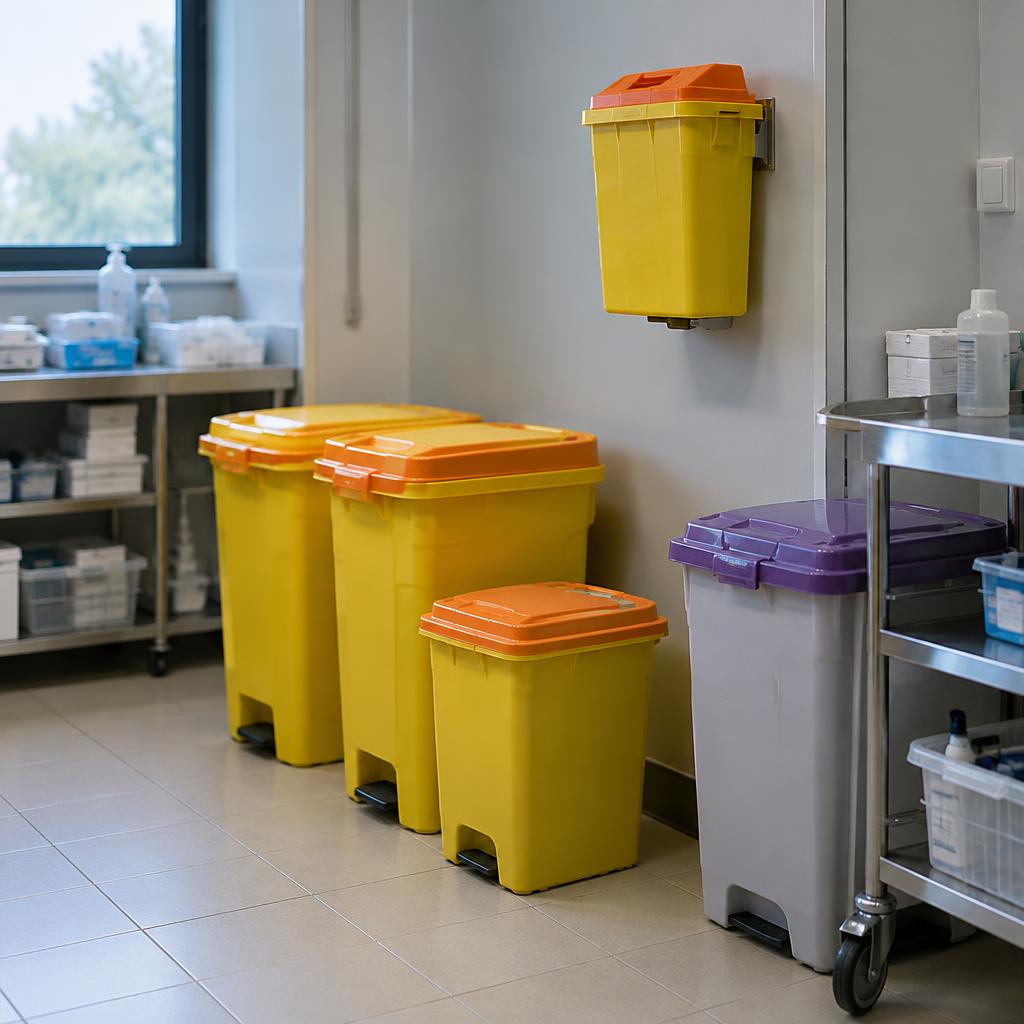
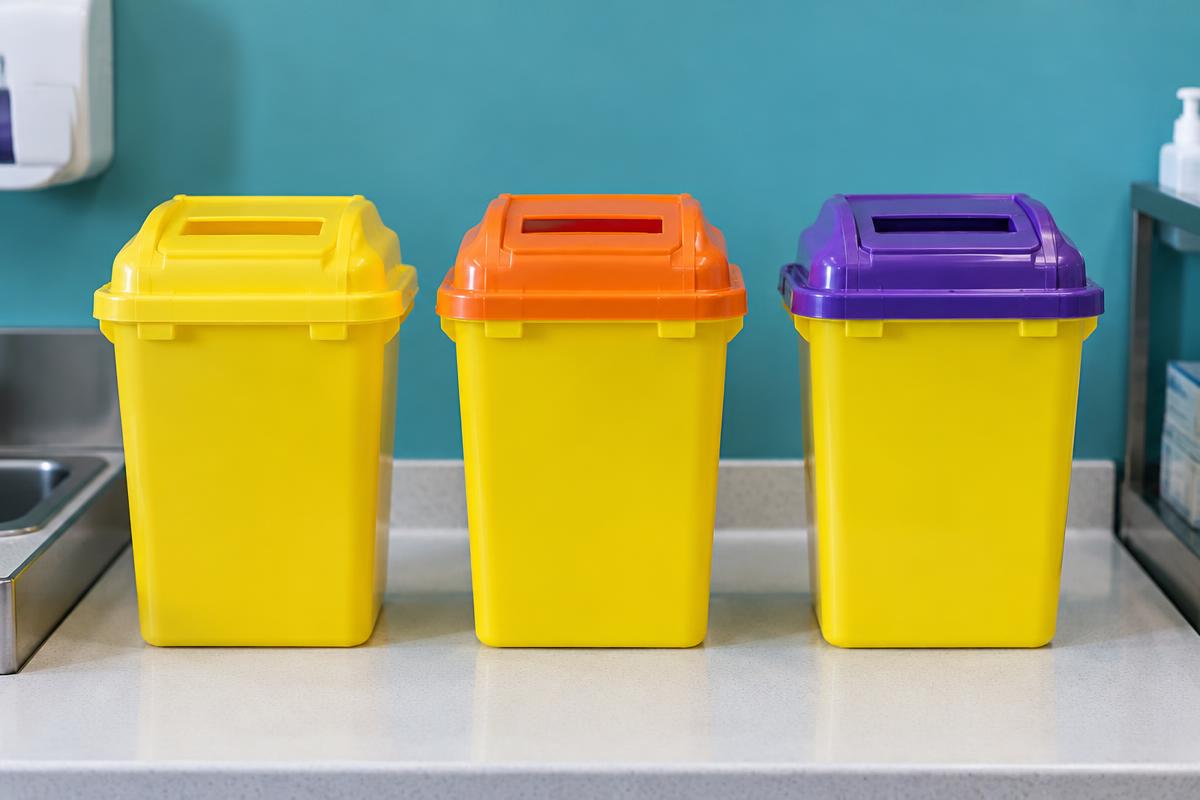
Yellow, orange and purple lids are familiar on sharps containers, but they are not interchangeable. The colour is a useful signal about the intended waste stream — not proof of what is actually inside.
This guide explains the general colour-coding approach in NHS England’s Health Technical Memorandum 07-01. Follow the guidance and procedures applicable to your organisation and location, and confirm the receiving facility’s requirements. The examples below do not confirm Sharps Waste’s acceptance of any particular material.
Why sharps bin lid colours matter
The healthcare waste guidance separates streams according to infection risk and contamination with medicines or chemicals. Containers help keep those streams separate, so staff need to understand both the label and the waste description. See the Environment Agency’s healthcare waste classification guidance for the distinction between waste types.
| Lid colour | General intended sharps stream |
|---|---|
| Orange | Infectious sharps without medicine or chemical contamination. |
| Yellow | Sharps contaminated with medicines other than cytotoxic or cytostatic medicines; follow the applicable guidance for chemical contamination. |
| Purple | Sharps contaminated with cytotoxic or cytostatic medicines. |
This summary follows the Environment Agency healthcare waste packaging-colour table and HTM 07-01. It is not a complete segregation policy.
Orange lids: infectious sharps without medicines
Orange-lidded sharps containers are generally used for infectious sharps that are not contaminated with medicines or chemicals. A sharp used to take a blood sample may fall within this stream, provided the actual waste assessment confirms that no other contamination changes the classification.
“Orange” does not mean all needles are suitable. A device with residual medicine, for example, needs a different assessment. NetRegs’ sharps guidance explains the importance of distinguishing medicinally contaminated sharps from other sharps.
Yellow lids: medicinally contaminated sharps
Yellow lids are generally associated with sharps contaminated with non-cytotoxic, non-cytostatic medicines. The NHS guidance also addresses sharps with chemical contamination within the appropriate segregation and treatment requirements.
Do not decide by appearance alone. A syringe, vial or device may contain residues that are not obvious. Tell the assessor what the product was used for and identify any known medicine or chemical. Refer to HTM 07-01 rather than treating this colour summary as a disposal instruction.
Purple lids: cytotoxic and cytostatic contamination
Purple identifies waste contaminated with cytotoxic or cytostatic medicines, including sharps used in their administration. The Environment Agency classification guidance treats cytotoxic and cytostatic medicinal waste as a distinct hazardous category.
That is a specialist stream, not a general pharmaceutical waste container. Sharps Waste does not advertise confirmed collection acceptance for cytotoxic or cytostatic medicines. The disposal site’s authorisation and acceptance requirements must be checked before any route is agreed.
Colour is not a waste classification
The colour on a lid does not replace a waste description, the appropriate List of Waste code or an assessment of hazardous properties. A correctly coloured container can still contain incorrectly segregated waste. Classification must reflect the contents, as explained in WM3 waste classification guidance.
Local procedures and guidance differ between organisations and jurisdictions. For Scotland, use the relevant NetRegs and SEPA guidance; in Wales, check Natural Resources Wales waste guidance. Do not change a bin’s stream merely by changing or relabelling the lid.
Before arranging a collection
For a sharps bin collection enquiry, prepare the number and size of bins, known contents, lid colours, container condition and postcode. Identify any medicine or chemical contamination and say when details are unknown.
If you are holding original, unused products instead of used containers, our unused sharps disposal page explains the different information needed. Acceptance remains subject to the licensed disposal site and regulatory requirements.
This article is for general information only and does not constitute professional, legal or hazardous waste advice. Waste producers are legally responsible for correctly classifying their waste. For guidance on your specific waste, please contact our team.