EWC codes identify waste types in a common classification system. You may see them on collection paperwork, consignment notes or waste acceptance documents. The code is a useful shorthand, but it does not replace an accurate description of the waste.
EWC codes in plain English
EWC stands for European Waste Catalogue. In current regulatory guidance, the codes are also described as List of Waste (LoW) codes. The WM3 waste classification guidance contains the list and explains how to use it when classifying waste.
The appropriate entry depends on the source and nature of the waste. A product name, a container colour or a photograph is not enough on its own to settle the classification. The waste producer remains responsible for correct classification.
How a six-digit code is structured
A waste code contains six digits, commonly written as three pairs. The first pair identifies a chapter, the second identifies a subchapter, and the final pair identifies an individual waste entry. This structure is described in SEPA’s EWC coding guidance and the List of Waste in WM3.
For example, chapter 18 concerns wastes from human or animal healthcare and related research. Subchapter 18 01 concerns human healthcare. The entry 18 01 03* describes waste whose collection and disposal are subject to special requirements to prevent infection, as set out in the Environment Agency’s healthcare waste classification guidance.
This is an illustration of the code structure, not a recommendation to assign that code to every sharps container. Other entries and hazardous properties may apply depending on the actual waste.
What does an asterisk mean?
An asterisk next to an entry indicates hazardous waste. In Scotland, hazardous waste is called special waste. Both the asterisk and the detailed entry need to be read alongside the classification method; see WM3 and NetRegs’ special waste guidance.
Some entries are “absolute” hazardous or non-hazardous entries. Others are “mirror” entries, where assessment of the waste’s composition and hazardous properties determines which entry is appropriate. A missing asterisk is not a reason to skip the assessment process.
Why similar-looking waste can have different codes
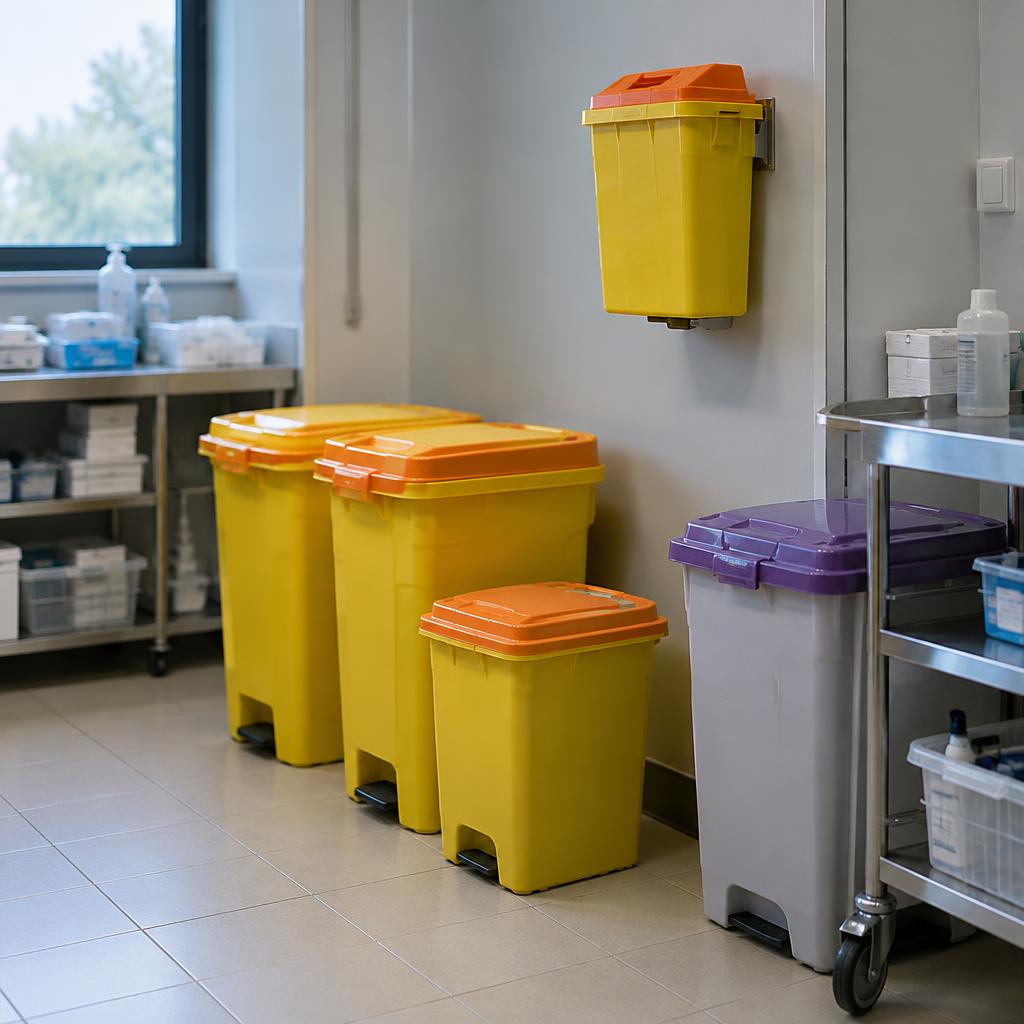
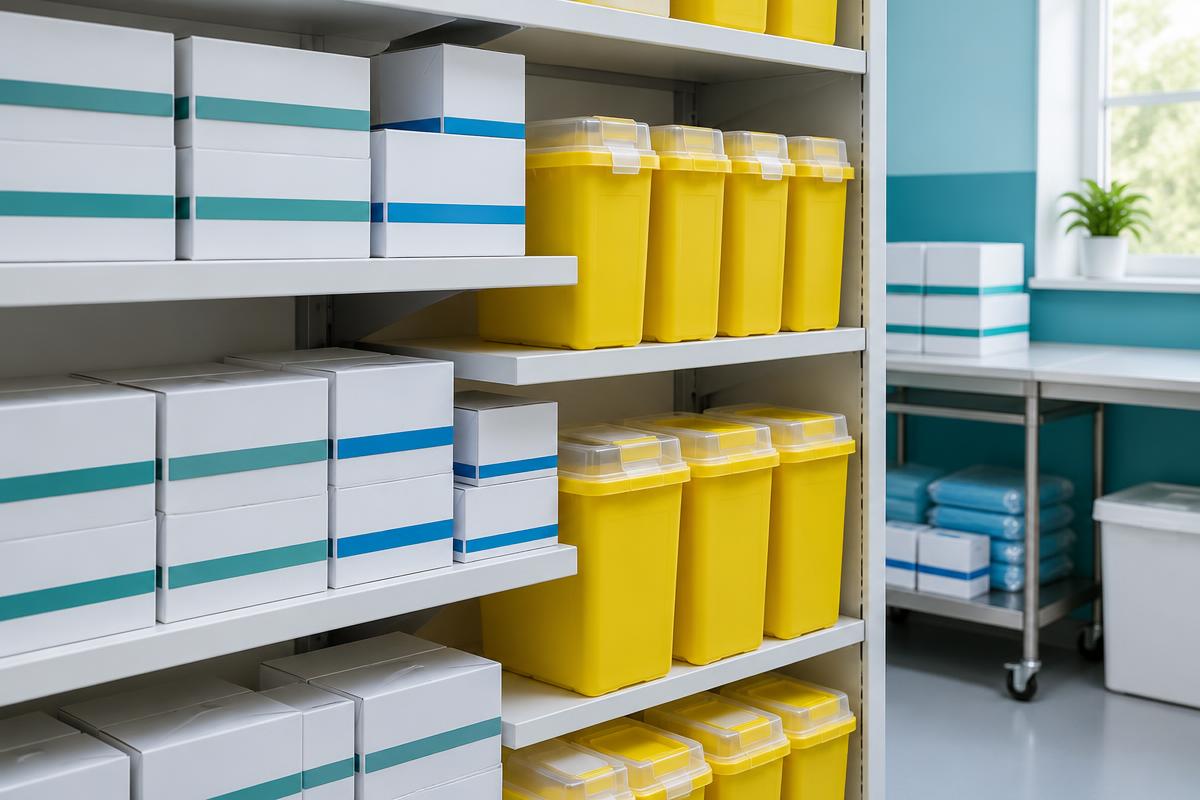
Two sealed yellow sharps bins can contain different waste. One might contain infectious sharps without medicine contamination; another might contain sharps contaminated with medicines. Their contents and hazards, not their appearance alone, determine the classification.
The healthcare classification guidance distinguishes infectious waste, medicines, cytotoxic or cytostatic medicines and other healthcare streams. Unused products also require assessment of their actual contents, rather than automatically taking the code of used clinical waste.
How to approach classification
Begin by identifying where the waste came from and what it contains. Follow the selection procedure in WM3 technical guidance to identify the relevant chapter and entry, and assess hazardous properties when the entry requires it.
- Use process and product information to describe the waste accurately.
- Identify known medicines, chemicals and infection risks.
- Check whether the relevant entries are absolute or mirror entries.
- Obtain appropriate classification advice when information is missing.
Do not choose a less hazardous-looking code simply because it seems easier to collect. Receiving-site acceptance is a separate check: a code does not automatically mean that a particular facility can take the waste.
What to include in your collection enquiry
Include any existing EWC code and classification documents, together with the material description, quantity, packaging and postcode. If a code has not been established, say that it is unknown rather than guessing.
For original surplus products, our unused sharps disposal page explains useful stock-list details. You can then contact our team for an individual collection assessment. Waste acceptance remains subject to the licensed disposal site and regulatory requirements.
This article is for general information only and does not constitute professional, legal or hazardous waste advice. Waste producers are legally responsible for correctly classifying their waste. For guidance on your specific waste, please contact our team.